
Learning how to take hawthorn cuttings is one of the easiest and most cost-effective ways to propagate this popular native British shrub. Hawthorn (Crataegus monogyna), also known as quickthorn or May blossom, is widely used for dense hedges, wildlife gardens, and ornamental trees. It roots reliably from hardwood cuttings, making it an ideal project for beginner gardeners who want to grow strong, thorny hedges or specimen trees for free.


Why Take Hawthorn Cuttings?
- Perfect for hedging and boundaries: Hawthorn grows into a thick, thorny hedge that provides excellent security, wind protection, and privacy. A well-grown hawthorn hedge is almost impenetrable and much cheaper when grown from your own cuttings.
- True-to-type plants: Cuttings produce genetically identical clones of the parent plant. This means you keep the exact growth habit, flower colour, and berry production you like — unlike growing from seed, which can produce very variable results.
- Extremely cost-effective: Garden centres and nurseries charge £8–£25 for a single hawthorn plant. From one healthy parent bush you can easily produce 20–50 new plants for almost zero cost.
- High success rate: Hawthorn is one of the easiest native British shrubs to propagate. Hardwood cuttings taken in winter have a naturally high success rate (often 70–90%) because the plant is dormant and hardy.
- Wildlife and environmental benefits: Hawthorn supports huge biodiversity. Its flowers feed bees and butterflies, its berries (haws) are vital winter food for birds, and its dense structure provides nesting sites and shelter for hedgehogs, insects, and small mammals.
- Rejuvenation: Older hawthorns can become leggy and less productive. Cuttings let you replace tired plants with fresh, vigorous young ones.
Hawthorn vs Blackthorn – Quick Comparison
| Feature | Hawthorn (C. monogyna) | Blackthorn (Prunus spinosa) |
|---|---|---|
| Thorns | Strong but less vicious | Extremely sharp |
| Flowers | White, May flowering | White, March–April |
| Berries | Red haws (bird food) | Blue sloes |
| Growth Rate | Medium | Very fast |
| Best Use | Mixed wildlife hedges | Very dense stock-proof hedges |
Note: Hawthorn is generally preferred for garden hedges because it is less aggressive than blackthorn.
When is the Best Time to Take Hawthorn Cuttings?
Hawthorn is almost always propagated using hardwood cuttings taken when the plant is fully dormant:
- Ideal period: Late autumn to late winter (November – February).
- Best months: December and January.
At this time the plant has stopped growing, energy is stored in the stems, and there are no leaves to lose moisture. This makes the cuttings very tough and low-maintenance — you don’t need propagators or humidity covers like with softer summer cuttings.
How to Take Hawthorn Cuttings?
Taking Hawthorn cuttings is not overly complicated, but there are several things to consider to increase your chances of success. You will also need specific items, which you may already have in your shed.
What You Need
- Sharp tool for cutting (knife, secateurs etc.)
- Rooting hormone (amazon link – opens in a new tab)
- Polythene bag
- Bright windowsill
- Potting mix
- 10-inch pots
- Gloves
Step 1 – Choose the Parent Plant
Pick a healthy, vigorous hawthorn that is growing strongly and shows no signs of disease or heavy pest damage. The best parent plants are usually between 3 and 15 years old. Avoid very old, woody, or stressed trees, as they produce lower-quality cuttings.
Step 2 – Select and Cut the Stem
Look for straight, pencil-thick stems from the current or previous year’s growth.
- Cut lengths of 20–30 cm (8–12 inches).
- Make a straight, clean cut at the base just below a bud.
- Make a sloping cut at the top just above a bud — this helps rainwater run off and reduces the chance of rot at the tip.
Use sharp, clean secateurs to avoid crushing the stems.
Step 3 – Prepare the Cutting
Remove any remaining leaves or side shoots completely (hawthorn is deciduous in winter, so this is usually easy).
Optionally, wound the base by gently scraping a thin strip of bark on one side — this exposes the cambium layer and encourages faster root formation.
Dip the bottom 3–4 cm in rooting hormone powder or gel. While not essential, rooting hormone noticeably improves results with hawthorn.
Step 4 – Plant the Cutting
You have two easy options:
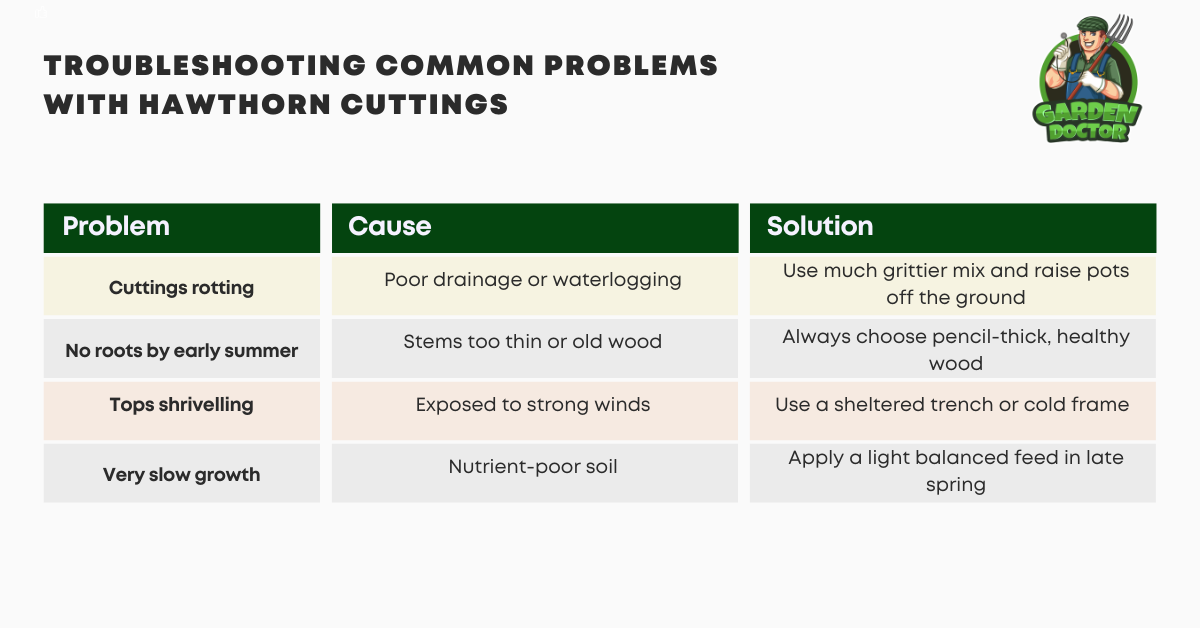
- In pots: Use deep 9–13 cm pots filled with a 50/50 mix of peat-free compost and sharp sand or grit for excellent drainage.
- Trench method (best for large numbers): Dig a narrow trench in a sheltered part of the garden, add a layer of sand at the bottom, insert the cuttings vertically so two-thirds of their length is buried, then firm the soil back around them.
Water the area or pots well after planting.
Step 5 – Aftercare
Place pots in a cold frame, unheated greenhouse, or sheltered garden spot. Trench cuttings can stay in the ground.
Keep the soil/compost moist but never waterlogged throughout winter and spring.
No humidity cover is needed — the dormant cuttings are naturally tough.
Roots will develop slowly over the next 4–8 months.
Step 6 – Pot On or Plant Out
By the following autumn (or spring if very strong), the cuttings should have a good root system and can be moved to their final growing position.
Long-Term Hedge Management
- Space plants 30–45 cm apart for a dense hedge.
- Trim twice a year (late summer and late winter).
- Protect young plants from rabbits and deer with guards for the first 3 years.
- Hawthorn hedges reach full density in 4–6 years.
Do You Need Rooting Hormone for Hawthorn Cuttings?
No, rooting hormone is not strictly necessary when taking hawthorn cuttings — many gardeners successfully propagate them without it. However, using rooting hormone is strongly recommended, especially for beginners.
Why it helps:
Rooting hormone (available as powder or gel) contains natural or synthetic plant hormones (auxins) that stimulate root cell development. Hawthorn can be slow to root, and the hormone significantly increases both the speed and success rate of rooting. It can turn a 60% success rate into 80–90% and helps produce stronger, healthier root systems.
Garden Doctor Recommendation: Use a general-purpose rooting hormone powder or gel when preparing your cuttings. Dip the base 3–4 cm into the hormone, tap off the excess, and plant immediately. It’s a low-cost addition (Amazon link – opens in a new tab) for a tub that lasts years that gives noticeably better results with hawthorn.
When Can I Plant My Hawthorn Cuttings Outside?
Hawthorn cuttings taken in winter are slow growers, so patience is important.
Best planting time:
- Following autumn (October – November) if the cuttings have developed a strong root system and good top growth.
- Early spring (March – April) is the safest and most common time for most UK gardeners.
How to know they’re ready:
- The cutting should resist a gentle tug (indicating good roots).
- It should have healthy new leaves and look strong.
- The plant should be roughly 30–60 cm tall with a well-established root ball.
Can Hawthorn Cuttings be Propagated in Water?
Water propagation is possible but not recommended for hawthorn cuttings.
Why it’s not ideal:
Hawthorn is a woody plant that prefers the traditional hardwood method in soil or compost. Roots grown in water are often thin, fragile, and less able to adapt when transplanted into soil. This can lead to higher failure rates after potting up.
If you still want to try water propagation (good for experimentation or children):
- Take 20–25 cm cuttings as normal.
- Place them in a clean jar or vase with room-temperature water covering the bottom 5–6 cm of the stem.
- Change the water every 2–3 days to prevent bacteria and algae.
- Keep the jar on a bright windowsill (indirect light).
- Once roots reach 4–6 cm long (usually 6–10 weeks), pot them carefully into gritty compost and keep them humid for the first 2 weeks.
Garden Doctor Verdict: For the best, strongest plants, stick with the compost or trench method. Water propagation works better for softer summer cuttings (like penstemon or jasmine) than for hardy winter hardwood cuttings like hawthorn.
Conclusion
Whether you’re a beginner or an experienced gardener, propagating Hawthorn cuttings is a great low-cost way to create new plants. The process is simple and can be done by just about everyone and by following the simple steps above, you can easily create new plants that will thrive in your garden.

Garden Doctor Tips
“Take multiple cuttings from multiple plants to increase chances of success!”
“If you want to involve the kids, pop your cuttings in water so you can see the roots as they grow!”
“Remember not to leave the cutting in direct sunlight as this can cause the leaves to burn and the cutting will be unlikely to survive!”
“When covering, ensure that your cuttings are not touching the plastic. Being in contact with the plastic when wet can lead to rotting and other problems!”
Frequently Asked Questions
What potting mix do I need for Hawthorn cuttings?
Hawthorn cuttings do best in peat-free compost mixed 50% with perlite.
Can Hawthorns be grown from cuttings?
Yes, Hawthorns can be grown from cuttings. Cuttings should be taken from healthy, new growth in late spring or early summer.
Can you take cuttings from Hawthorns?
Yes, you can take cuttings from Hawthorns however, this variety of trees is notoriously difficult to propagate from cuttings and many people report around a 20-30% success rate.
What time of year do you take hawthorn cuttings?
The best time to take hawthorn cuttings is in late spring or early summer when the plant’s new growth is still soft and vigorous.
What is the best way to propagate hawthorn?
The best way to propagate hawthorn is by taking cuttings from a healthy parent plant and rooting them in a suitable potting mix.
Is hawthorn fast growing?
No, hawthorn is not considered a fast-growing plant. It generally grows at a moderate pace.
How do you propagate hawthorn from cuttings UK?
To propagate hawthorn from cuttings in the UK, select healthy stems from a parent plant, cut them to the desired length, remove lower leaves, dip the cuttings in rooting hormone powder, plant them in a suitable potting mix, and keep them in a warm and humid environment.
Can hawthorn trees be grown in pots?
Yes, hawthorn trees can be grown in pots, but it’s essential to choose a pot that is large enough to accommodate the root system, use appropriate potting mix, and ensure that the plant receives sufficient sunlight and water.
Author
Trevor Wright is not just a seasoned horticulturist; he’s the esteemed Garden Doctor. With a BSc in Horticulture and years of hands-on experience in the soil, Trevor has become a trusted mentor for all things gardening. As the founder of Garden Doctor, he’s committed to clarifying the intricacies of gardening, offering straightforward advice that’s rooted in years of practice. His writing is a garden of how-tos, savvy insights, and comprehensive guides that enable individuals to nurture and grow their garden dreams. When he’s not knee-deep in garden beds, Trevor is at his keyboard passing on his green-thumbed wisdom to budding gardeners, ensuring that the legacy of sustainable and joyful gardening blossoms far and wide.


