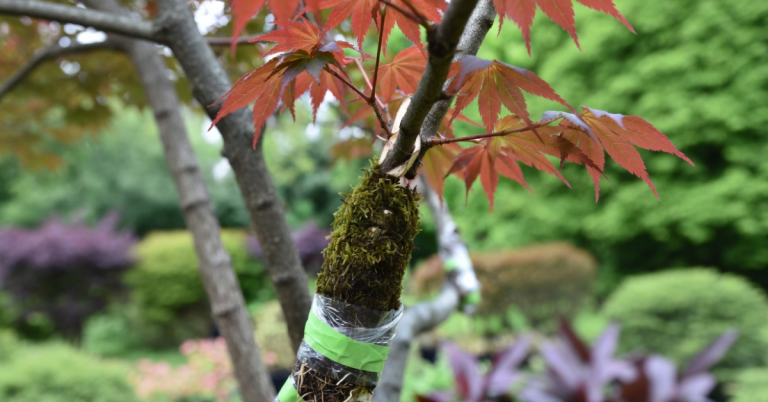
Learning how to take Acer (Japanese Maple) cuttings is a challenging but rewarding project for UK gardeners who want to propagate these beautiful, elegant trees. Japanese Maples (Acer palmatum and related species) are prized for their stunning foliage, delicate shape, and vibrant autumn colours. However, they are notoriously difficult to root from cuttings compared to many other plants. Success rates are typically low (20–50% even with good technique), which is why professional nurseries usually use grafting or layering. This comprehensive, honest guide is written for beginners and includes realistic expectations, the best methods, and alternatives.


Why Try Acer Cuttings?
- True-to-type plants — Cuttings produce identical clones of the parent tree (same leaf shape, colour, and growth habit).
- Cost saving — Named Japanese Maples cost £25–£80+ each. Cuttings let you multiply special varieties for free.
- Preserve rare cultivars — Excellent for keeping unusual or sentimental trees.
- Satisfaction — Successfully rooting a Japanese Maple from a cutting is a real achievement for any gardener.
Important reality check: Japanese Maples are slow and reluctant to root from cuttings. Many experienced gardeners prefer air-layering or buying grafted plants for reliable results. Cuttings are best seen as a fun, low-cost experiment rather than a dependable propagation method.
Grafting, Air-Layering or Cuttings – Which is Best?
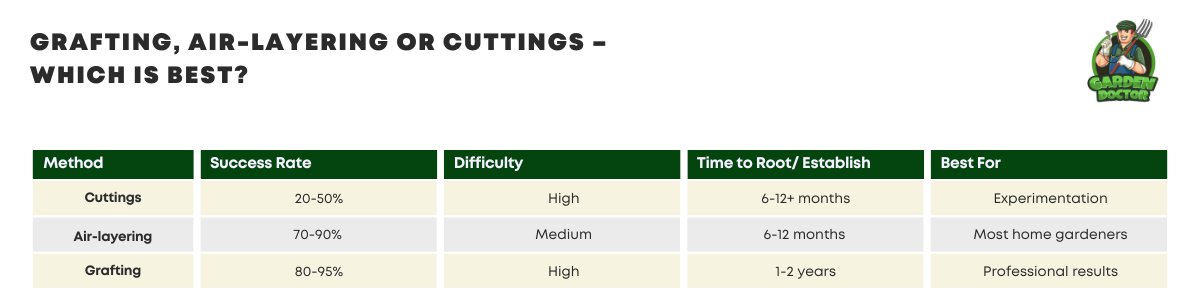
Recommendation: Try cuttings for fun, but consider air-layering for much higher success with Japanese Maples.
Best Time to Take Acer Cuttings in the UK
- Softwood cuttings (most common method): Late spring to early summer (May – early July), when new growth is still soft but beginning to firm.
- Semi-ripe cuttings: Mid to late summer (July – August).
- Avoid hardwood cuttings in winter — they have very low success rates with Acers.
How to Take Acer Cuttings?
Japanese Maples are slower and more difficult to root than many other plants, so attention to detail at every stage greatly improves your chances. Here’s a clear, thorough walkthrough:
What You Need
- Sharp tool for cutting (knife, secateurs etc.)
- Rooting hormone (amazon link – opens in a new tab)
- Polythene bag
- Bright windowsill
- Potting mix
- 10-inch pots
- Gloves
Step 1 – Choose the Parent Plant
Select a healthy, vigorous, disease-free Japanese Maple. Look for a tree that shows strong growth and good leaf colour. Younger trees or branches (2–4 years old) root significantly better than very old, thick wood because they still have high levels of natural rooting hormones and more active growth cells. Avoid any trees showing signs of stress, leaf scorch, or disease, as weak parent material almost always leads to poor rooting success.
Step 2 – Select and Cut the Stem
Choose non-flowering side shoots that are 10–15 cm (4–6 inches) long, preferably with a small “heel” (a tiny piece of older wood where the shoot joins the main branch) if possible — this can improve rooting.
- Cut just below a node at a 45° angle — the angled cut increases the surface area for roots to emerge and helps prevent rot.
- Make a clean, straight cut at the top just above a node.
Note: Use sharp, sterilised secateurs to avoid crushing the delicate stems.

Step 3 – Prepare the Cutting
Carefully remove the lower leaves, leaving only 3–4 healthy leaves at the top. If the remaining leaves are large, cut them in half to reduce water loss through transpiration while the cutting is trying to grow roots.
Lightly wound the base by gently scraping a thin strip of bark on one side — this exposes the cambium layer and encourages faster callus and root formation.
Dip the base in rooting hormone gel or powder. This step is almost essential for Acers, as they are naturally reluctant to root without extra help.
Step 4 – Plant the Cutting
Fill small pots (9–10 cm) with a well-draining, ericaceous compost mix. A good recipe is:
- 50–60% ericaceous (acidic) compost — Essential for Japanese Maples as they prefer a pH of 5.5–6.5.
- 40–50% sharp perlite or horticultural grit — Provides excellent drainage and aeration, which is critical because Acers hate sitting in heavy or waterlogged soil.
Why ericaceous compost?
Japanese Maples are sensitive to high pH levels. Standard peat-free multi-purpose compost is often too neutral or alkaline, which can cause leaves to turn yellow and stunt growth. Using ericaceous compost helps maintain the acidic conditions these trees love and prevents common nutrient deficiencies.
Make a hole with a dibber or pencil, insert the cutting so that at least two nodes are buried, then gently firm the mix around the stem for good contact. Water lightly with rainwater if possible (it is naturally slightly acidic).
Why this mix? Japanese Maples hate sitting in heavy, wet soil — excellent drainage and aeration are critical to prevent rot during the long rooting period.

Step 5 – Create Humidity
Cover the pot with a clear plastic bag (with a few small ventilation holes) or place it inside a propagator. This maintains high humidity around the leaves, preventing the cutting from drying out before roots form.
Position in bright, indirect light — a north-facing windowsill or shaded greenhouse is ideal. If possible, provide gentle bottom heat (20–24°C) using a propagator mat. Bottom heat significantly improves rooting success with Acers.
Step 6 – Aftercare
Keep the compost moist but never soggy — it should feel like a wrung-out sponge. Mist the leaves lightly if they start to wilt.
Check regularly for fungal issues (grey mould) and remove any affected cuttings immediately.
Roots can take 6–12 months or longer to develop. Be very patient and resist the urge to tug-test too early, as this can damage delicate new roots.
Although rooting hormones are not always necessary, without them, the cutting may take longer to develop roots and they may not grow as vigorously.
Step 7 – Pot On and Harden Off
Once the cuttings have developed a good root system (visible through the drainage holes or you feel gentle resistance), carefully pot them individually into slightly larger pots with good-quality ericaceous or peat-free compost.
Gradually harden them off over 10–14 days by increasing fresh air and outdoor exposure. Only plant them out in their final position the following spring or autumn once they are strong and well-established.
Common Problems and Troubleshooting Japanese Maple Cuttings
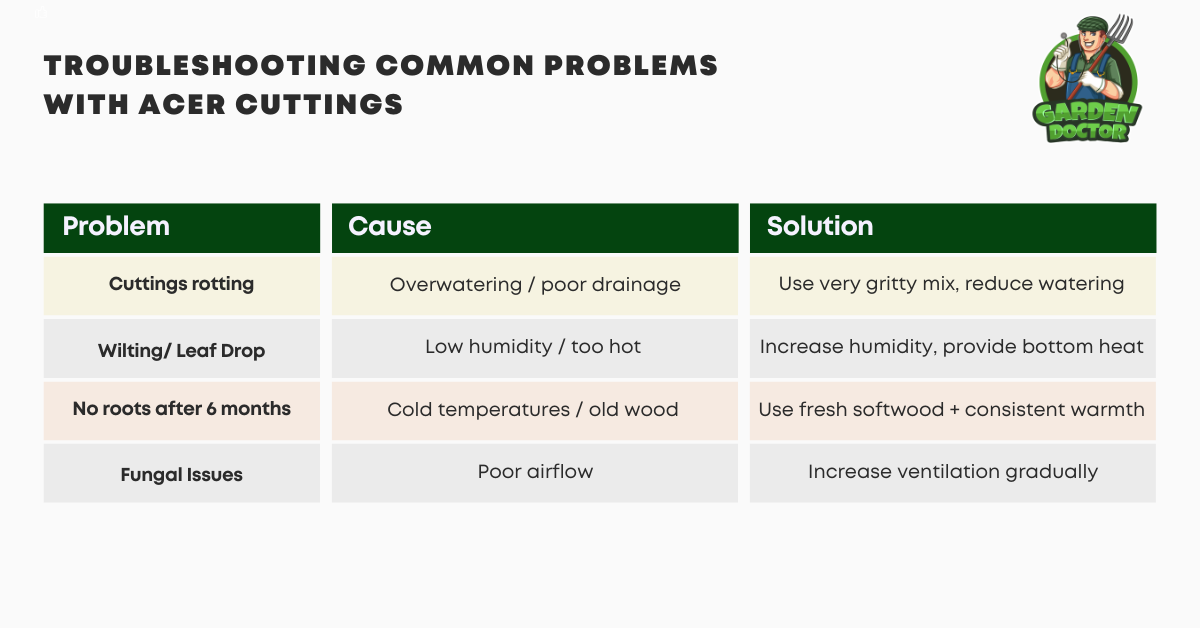
Expected Timeline & Long-Term Care
- Roots form: 6–12+ months (very slow).
- Strong new growth: Following spring/summer.
- Plant out: Usually the second spring after taking cuttings.
- Mature tree: Can take 5–10+ years to develop full beauty.
- Location: Protect from cold east winds and late frosts.
- Watering: Use rainwater for watering (naturally acidic – Acers do not like tap water).
Can Acer Cuttings be Propagated in Water?
Yes, Acer (Japanese Maple) cuttings can be propagated in water, but it is generally not recommended and has a much lower success rate than the compost method.
Why Water Propagation is Not Ideal for Acers
- Japanese Maples are woody plants that prefer a well-aerated, slightly acidic rooting medium.
- Roots grown in water are often thin, weak, and brittle, making them prone to damage when transplanted into soil.
- High risk of rot and bacterial issues in water, especially because Acer cuttings take a long time to root (often 6–12+ months).
- Success rate in water is typically very low (under 20–30%), compared to 20–50% (with good technique) in a proper ericaceous/perlite mix.
If You Still Want to Try Water Propagation
Here’s how to do it with the best possible chance:
- Take 10–15 cm semi-ripe cuttings in early summer.
- Remove lower leaves, leaving 3–4 at the top.
- Optionally wound the base and dip in rooting hormone.
- Place in a clean jar with room-temperature rainwater (slightly acidic).
- Keep the bottom 4–5 cm submerged, leaves above water.
- Place on a bright windowsill (indirect light) and change the water every 2 days.
- Be extremely patient — roots may take many months.
- Once roots are 3–5 cm long, pot up very carefully into ericaceous compost + perlite and keep high humidity for several weeks.

When to Accept Defeat and Buy a Plant
If you’ve had repeated failures after 12 months, it may be more practical (and less frustrating) to buy a well-grown grafted Japanese Maple. Cuttings are best treated as a low-cost experiment rather than a reliable method.
Conclusion
Whether you’re a beginner or an experienced gardener, propagating Acer cuttings is a great low-cost way to create new plants. The process is simple and can be done by just about everyone and by following the simple steps above, you can easily create new plants that will thrive in your garden.

Garden Doctor Tips
“If you can, take multiple cuttings from multiple plants to increase chances of success!”
“If you want to involve the kids, pop your cuttings in water so you can see the roots as they grow!”
“Remember not to leave the cutting in direct sunlight as this can cause the leaves to burn and the cutting will be unlikely to survive!”
“When covering, ensure that your cuttings are not touching the plastic. Being in contact with the plastic when wet can lead to rotting and other problems!”
Frequently Asked Questions
What potting mix do I need for Acer cuttings?
A 50/50 blend of peat-free compost and perlite provides perfect drainage and moisture retention.
Can Acers be grown from cuttings?
Yes, Acers can be grown from cuttings. Cuttings should be taken from healthy, young plants in late spring or early summer.
Can you take cuttings from Acers?
Yes, you can take cuttings from Acers. This variety of tree is relatively easy to propagate from cuttings, and in fact, taking cuttings is my favourite way to create new plants.
Are Acers Japanese maples?
Yes, Japanese maple’s are called Acer Palmatum hence the shortened name Acer.
Do You Need Rooting Hormone for Acer Cuttings?
It is not essential but strongly recommended—it speeds rooting and improves success rates significantly.
Author
Trevor Wright is not just a seasoned horticulturist; he’s the esteemed Garden Doctor. With a BSc in Horticulture and years of hands-on experience in the soil, Trevor has become a trusted mentor for all things gardening. As the founder of Garden Doctor, he’s committed to clarifying the intricacies of gardening, offering straightforward advice that’s rooted in years of practice. His writing is a garden of how-tos, savvy insights, and comprehensive guides that enable individuals to nurture and grow their garden dreams. When he’s not knee-deep in garden beds, Trevor is at his keyboard passing on his green-thumbed wisdom to budding gardeners, ensuring that the legacy of sustainable and joyful gardening blossoms far and wide.